
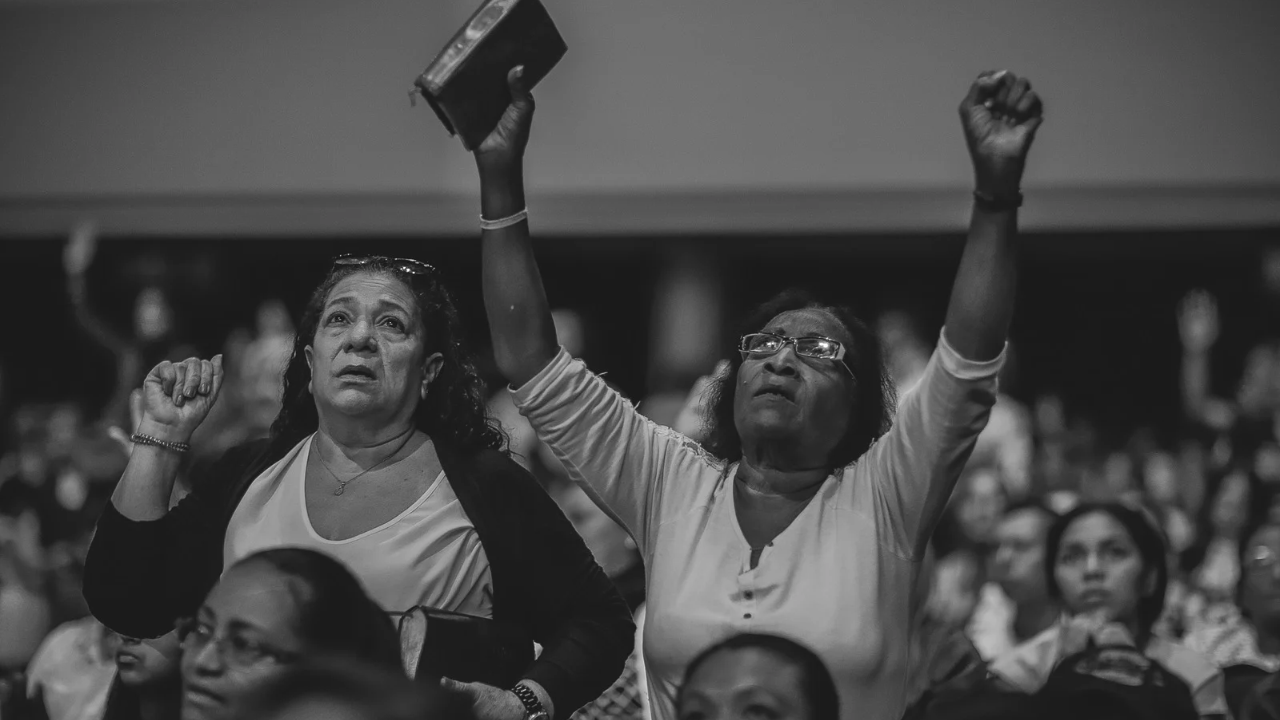
Your congregation is meeting. People are giving. Someone has asked for a tax receipt and you had to say no.
That is usually the moment a church starts looking into charitable status, and the moment the process starts to feel heavier than it should. Most guides to registering a charity in Canada are written for someone launching a food program or a scholarship fund. Churches have a different starting point and a different set of questions, and almost none of them get answered plainly.
Here is what the Canada Revenue Agency actually asks a church for, in the order it matters.
Charity status and incorporation are two different things
This trips up more congregations than any other single point.
Incorporating creates your organization as a legal entity. Registering as a charity gives that entity the ability to issue official donation receipts your donors can claim. They are separate processes, handled by separate parts of government, and one does not produce the other. A church can be incorporated for years and still not be a registered charity.
The practical order is: get the organization properly established first, then apply to the CRA. Your governing documents are part of the application, so the wording has to be right before you submit rather than after.
For churches without an existing corporate structure, that means federal not-for-profit incorporation comes first. If your congregation is already incorporated, the question becomes whether your existing documents say what the CRA needs them to say — and often they don’t, because they were drafted to satisfy a different requirement.
What “advancement of religion” means to the CRA
Churches apply under the charitable purpose the CRA calls advancement of religion. It is one of the four recognized categories, and it is a well-worn path: in the 2024-2025 fiscal year, advancement of religion accounted for 30% of all completed charitable registrations, second only to the broad “other purposes beneficial to the community” category (CRA, Report on the Charities Program 2024-2025).
The CRA’s own definition is narrower than most people expect. There must be an element of theistic worship — the worship of a deity or deities in the spiritual sense. Advancing religion in the charitable sense means preaching and advancing the spiritual teachings of a faith, and maintaining the doctrines and observances those teachings rest on. The CRA gives examples of what that looks like in practice: establishing and maintaining buildings for religious worship, organizing and providing religious instruction, and carrying out pastoral and missionary work (CRA, Advancement of religion).
Note what is not on that list. A community dinner, a youth basketball night, a food drive — these are good things, and churches do them constantly, but on their own they are not advancement of religion. They can still belong in your application. They just have to be presented correctly: either as activities that further your religious purpose, or under a second charitable purpose in their own right. Presenting a social program as though it were worship is one of the quieter ways an application gets questioned.
Your purposes clause: use the CRA’s own wording
The CRA publishes sample purposes for advancement of religion. Use them. They are not a starting point to be improved on — they are the wording the Charities Directorate already accepts, and there is no advantage in being original here.
The two that suit most churches:
- To advance religion by establishing and maintaining a house of worship with services conducted in accordance with the tenets and doctrines of [the specified faith]
- To advance religion by preaching the teachings, and religious tenets, doctrines and observances, associated with [the specified faith]
Two things to notice. The wording names a specific faith rather than religion in general. And it describes a concrete method — maintaining a house of worship, preaching, teaching, running a school of religious instruction — rather than an aspiration.
There is also a third purpose worth including that most churches don’t think to add:
- To undertake activities ancillary and incidental to the attainment of the above charitable purposes
That clause gives your church room to do the ordinary supporting things a congregation does — a welcome table, a small fellowship meal after the service, an administrative function — without every one of them needing to stand on its own as advancement of religion.
Those three purposes, in that combination, are what a Red Deer church we worked with submitted before being registered as a charity in July 2026. Two purposes lifted from the CRA’s own examples, plus the ancillary clause. Nothing bespoke.
Purposes that cause trouble tend to fail for the opposite reasons. They are broad (“to spread the gospel worldwide and transform communities”), they are aspirational rather than operational, or they quietly include something that isn’t charitable at all.
The CRA updated its own guidance on this in May 2026, and the update is worth knowing about. Its short guide on how to write a charitable purpose recommends every purpose contain three elements: the category of charity (what benefit the purpose confers), the scope of activities (how the organization will further it), and the eligible beneficiary group (who can receive the benefit). The CRA also says outright that the easiest approach is to copy from its own list of example charitable purposes and select the ones that genuinely reflect what your church does.
Take the regulator at its word on that. Copying its wording is not laziness — it is the fastest route through.
Your governing documents also need a dissolution clause stating that if the church ever winds up, its remaining assets go to other qualified donees. This is not optional wording, and its absence is a common reason documents come back.
The section that decides your application
If there is one part of a church application worth slowing down on, it is the description of activities.
The CRA lists lack of information on proposed activities as the first of its reasons for denying charitable registration. Not dishonesty. Not ineligibility. Insufficient detail about what the organization actually does.
Most applicants badly underestimate how much detail this means. Here is the difference.
What most churches write:
We hold weekly worship services and minister to the spiritual needs of our community. We plan to expand our outreach both locally and internationally as God provides.
That is two sentences describing an intention. An examiner cannot assess it.
The nine things each activity description needs
A well-prepared activity description is its own section, running several hundred words, and it answers all of the following:
- Which purpose it advances, and how. Say it in the first sentence: “Weekly Sunday Worship advances religion by providing public Christian worship…”
- When, how often, and how long. The day, the start and end time, the duration, whether it runs year-round.
- Where. The physical address, or the platform if it is delivered online.
- What actually happens, in sequence. Opening prayer, congregational singing, scripture reading, a sermon of a stated length delivered by the pastor, corporate prayer, benediction.
- Who delivers it, and who supports it. The pastor’s role in planning and preaching; the volunteer roles, when they arrive, what they do, who supervises them.
- Who benefits, and on what terms. Open to the public, no fees charged, participation voluntary.
- How the church keeps direction and control. Written service plans, a volunteer rota, attendance records, financial records of expenditures, the facility rental agreement and insurance on file.
- The anticipated annual expenditure, itemized. Not a round guess — rent, sound equipment, licensing, printing, communion elements, contingency.
- When it started or will start, and whether anyone else is involved. If there are no partnerships or intermediaries, say so explicitly.
What a prepared description looks like. This is real, and it worked.
A church in Red Deer we worked with was registered as a charity in July 2026 under the charity type advancement of religion. Below is the wording it submitted for the first of its activities, reproduced with the church’s permission and with identifying details removed:
Weekly Church Worship
Weekly Church Worship advances religion by providing public Christian worship each Sunday from 9:30 a.m. to 11:00 a.m. at a rented school gymnasium in Red Deer, with a concurrent Zoom option for those unable to attend in person. The activity is carried out through a structured 90-minute service that includes welcome and opening prayer, congregational singing, scripture readings, a sermon prepared and delivered by the pastor in accordance with Christian doctrine, corporate prayers, and closing benediction.
Volunteers arrive 30 to 45 minutes before the service to set up seating, the podium, the sound system, and the projection, to greet attendees, and to monitor the Zoom session. During the service, volunteers assist with music and audiovisual tasks, manage the Zoom waiting room and chat to ensure an orderly and reverent environment, and provide wayfinding to washrooms and emergency exits. After the service, volunteers record attendance, answer newcomer questions, and return the gym to its original condition in accordance with the facility rental terms.
The worship service is open to the public without restriction, no fees are charged, and participation is voluntary. Beneficiaries are members of the public who choose to attend, including congregants, visitors, and online attendees. The pastor is responsible for service planning, sermon preparation, and spiritual oversight, and coordinates a volunteer rota that sets out roles, arrival times, and supervision for ushers, music, set up, tear down, and Zoom hosting.
The charity will maintain direction and control through written service plans, attendance records, incident notes when required, and financial records of expenditures, and will keep the facility rental agreement and proof of insurance on file. The activity began in February 2025 and continues weekly year-round, subject to school facility availability and statutory holidays. There are no partnerships or intermediaries involved in delivering this activity.
The anticipated annual expenditures are $20,000, including $12,000 for rent of the school gym and facilities, $2,500 for purchase and upkeep of portable sound equipment, $500 for cables, stands, power bars and protective cases, $1,600 for laptops, projectors and screens, $500 for music licensing, $700 for communion elements and disposable cups, $800 for printing of bulletins, newcomer cards and signage, $700 for Zoom subscription and livestream accessories, and $700 for contingency and replacement of worn items so weekly worship can proceed without interruption.
That is one activity. Note what it never does: it never claims the church is growing, never describes a vision, never uses a word like “vibrant”. It reports. Times, durations, who does what, what it costs, and how the church keeps control of its own resources.
It is not more impressive than the two-sentence version. It is more specific, and it is complete. An examiner reading it can see a functioning church rather than an intention — and can see that the money is going where the purposes say it will.
The same application also covered a monthly online prayer vigil and pastoral counselling by phone, video and home visit, each described to the same depth, each with its own itemized budget. Three to five activities at that level is typical of the church applications we prepare.
This is where we see the most applications lose time. Founders write the vision, because the vision is what they are excited about. The CRA is assessing the present. Describe the service you held last Sunday, not the building you hope to buy in five years. If international mission work hasn’t started yet, it belongs in the application only if you can describe how it will actually operate — including how the church will keep direction and control over resources it sends abroad.
Can a church that meets online get charity status?
Yes. Congregations that gather on Zoom or Google Meet, or that broadcast from a home until a venue is secured, can and do register.
What changes is the detail the description has to carry. Instead of an address you give the platform and how access is managed — registration links, waiting rooms, password settings, who hosts. Instead of ushers you describe the technical host, the moderator who posts scripture in the chat, the volunteer who handles private prayer requests. The direction-and-control paragraph covers your written service plans, attendance logs, and the safeguarding measures that keep the environment orderly: recording disabled, screen sharing limited to the host, disruptive participants removed.
Social media ministry can also be a legitimate charitable activity in its own right — sermon clips, scripture teaching, testimony videos — provided you describe the editorial process, who approves content, and how it teaches the doctrines of the faith rather than simply promoting the church.
How long it takes
The CRA’s published service standard is a final decision on an application within nine months of receiving a complete application, and the CRA aims to meet that standard 80% of the time (CRA, Service Standards 2026–2027). This particular standard is new — it was introduced in 2025–2026, so older guidance you find online may quote a different figure.
Read that phrase carefully, because it is where the whole process turns. The nine months runs from a complete application. An application that arrives missing governing documents or activity descriptions doesn’t start a nine-month clock — it starts a correspondence cycle, and the clock waits.
In our experience, well-prepared church applications often come back faster than the standard. We have seen churches we have worked with receive charitable status in as little as five months. We cannot promise that, and no one honestly can: the decision rests entirely with the Charities Directorate. But the variable you control is whether the file lands complete.
The real risk isn’t refusal
This niche is often sold on fear, so it is worth knowing what the numbers say.
In 2024-2025 the CRA received 2,720 applications for charitable registration and approved approximately 81.9% of them. Denials were the least common outcome at 0.55% — 23 applications in the entire year.
What does go wrong is quieter. Thirty-six percent of applications arrived incomplete, commonly for missing or incomplete governing documents and missing descriptions of activities and financial information. A further 9% were simply abandoned by the applicants. The CRA rarely says no. Files stall, the group loses momentum, and the application dies of attrition.
That is the outcome worth planning against, and it is almost entirely a preparation problem.
Once you’re registered
Charitable status is not a finish line. Your church will file a T3010 information return every year, keep proper books and records, and issue receipts that meet the CRA’s requirements. Those three areas are where registered charities most often run into compliance trouble, and failure to file the annual return is the most common reason charities lose their status altogether.
If nobody in the congregation has done charity bookkeeping before, decide early who will. It is far cheaper to set up properly than to fix it after a letter arrives.
Frequently asked questions
Can our church issue tax receipts before we’re registered?
No. Only registered charities and other qualified donees can issue official donation receipts that donors claim for tax credits. You can accept donations while your application is in progress, but you cannot receipt them. Many churches tell their congregations plainly that receipting begins once registration is granted.
Do we have to incorporate before applying?
Your organization has to be properly established, with governing documents the CRA can assess. Incorporation is the most common route and generally the most straightforward for a congregation, because it creates a clear legal entity, a governance structure, and documents in a form the CRA is used to reading.
Does a house church or small congregation qualify?
Size is not the test. What matters is whether your purposes are charitable, whether there is genuine theistic worship, and whether you can describe real, current activities that advance your faith. Small congregations register successfully. Vague applications do not.
What if our church also runs a food bank or a youth program?
Those can be part of your application. They need to be presented either as activities that further your religious purpose or under an appropriate additional charitable purpose, with their own full description and budget. The mistake is folding them in loosely without explaining how they fit.
Is charitable registration provincial or federal?
Federal. Charitable status comes from the CRA regardless of which province your church is in. Incorporation can be federal or provincial, which is a separate decision.
Talk it through before you file
Most church applications that go badly don’t go badly because the church wasn’t eligible. They go badly because the purposes were worded broadly, the activities were described in two sentences instead of six paragraphs, or a required clause was missing from documents nobody thought to re-read.
Charity Fuel works with churches and places of worship across Canada on exactly this: getting the purposes and the activity descriptions right before anything is submitted, and handling communication with the CRA Charities Directorate from submission through to a decision. The Red Deer application quoted above is one of them. We offer special rates for churches and places of worship — see our pricing or read what other congregations have said on our testimonials page.
Is your church looking to take the next step toward charitable status? Book your free discovery call and let Charity Fuel help you move forward with clarity and confidence.
Charity Fuel provides charity registration and not-for-profit compliance consulting. We are not a law firm and this article is general information, not legal advice. Registration decisions rest with the CRA Charities Directorate, and no outcome can be guaranteed.